

Top 10 Saree with Veil AI Prompts for Traditional Bridal Coverage
Saree-with-veil prompts sit in a useful middle ground between traditional bridal photography and pure digital fantasy. The veil can be smoke, fabric, feathers, or light, but its job stays the same: it covers and reveals at once, adding mystery to a portrait that is already rich in texture and drape.
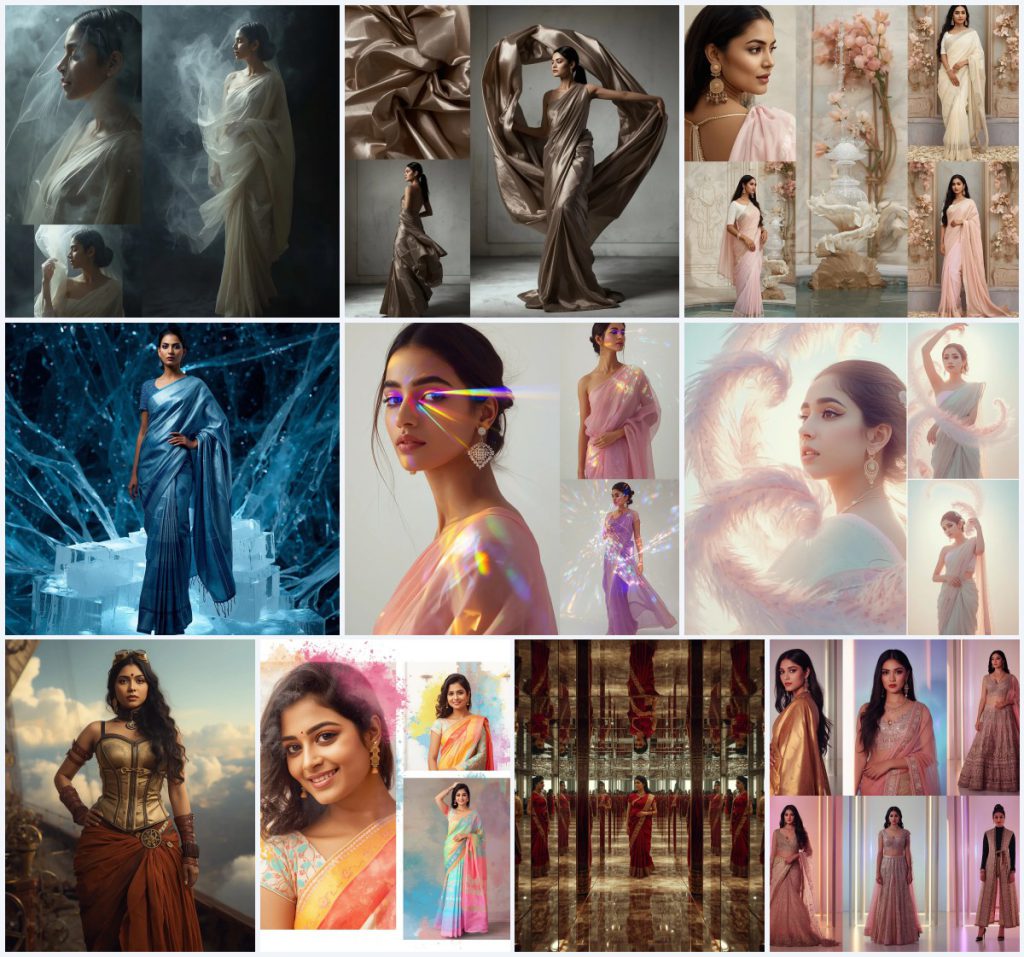
This collection gathers ten prompts that use that idea in different registers. Some keep the scene bridal and editorial, with pastel sarees and marble fountains. Others push the veil into science fiction, prismatic light, or mirrored infinity, so the same woman and the same drape logic appear in wildly different worlds.
What these saree-with-veil prompts are asking for
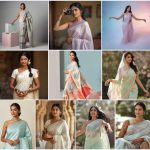
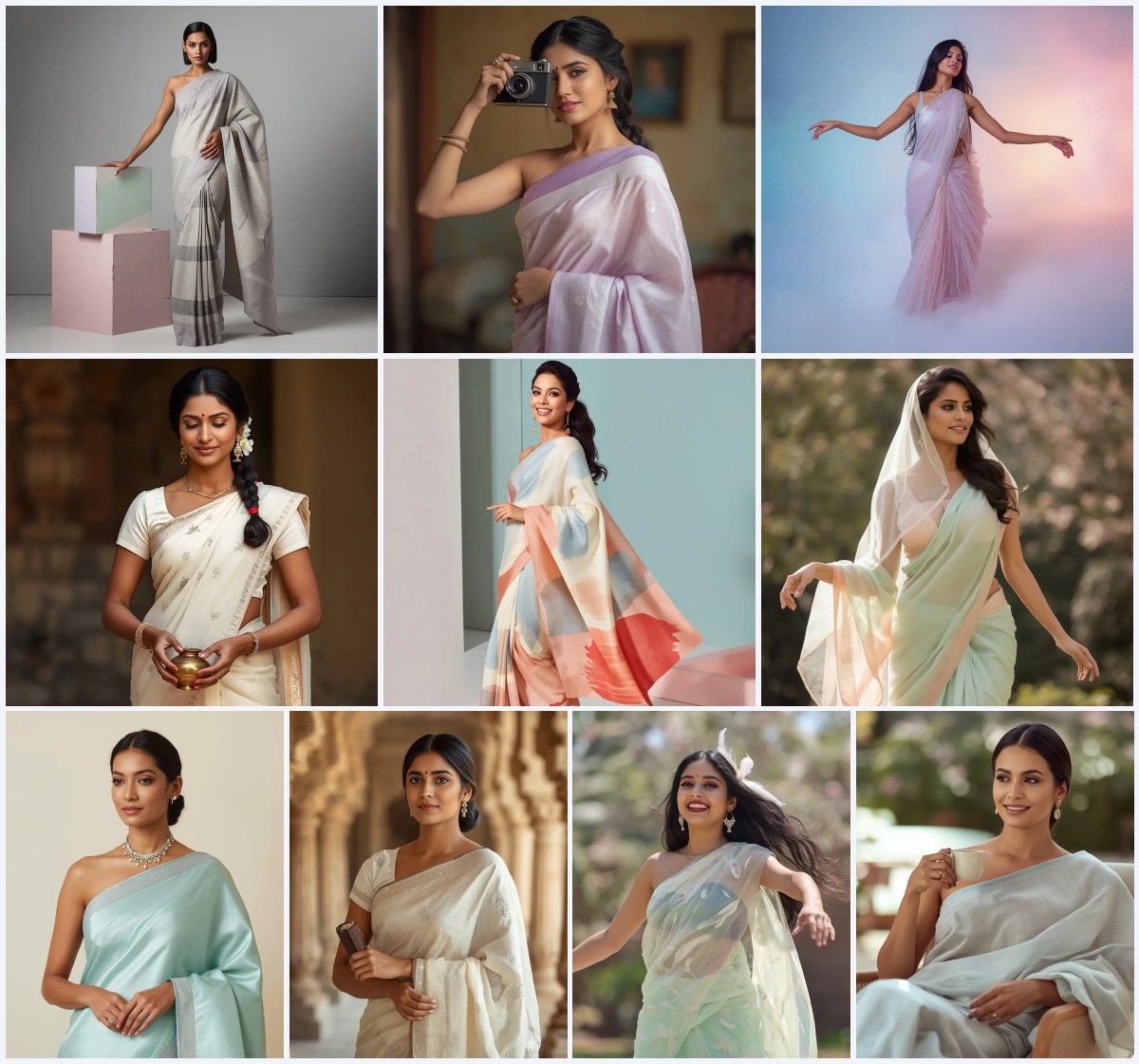
Across the set, the constant is an Indian woman in a saree whose silhouette is partly hidden by a veil-like element. The veil is never a plain dupatta hanging still. It moves, refracts, or dissolves, and the collage structure lets each prompt show the same subject from several distances: a close-up, a side profile, and a full-body pose. The prompts also share a taste for high resolution and cinematic light, whether that light is soft moonlight, studio flash, or the internal glow of a data glacier.
- An Indian woman in a flowing saree, from ivory silk to crimson silk and metallic silver.
- A veil effect made of smoke, refracted light, feather spirals, floating fabric, or mirrored reflections.
- Collage frames that repeat the subject as close-up, side profile, and full-body shot.
- Textures such as marble, carved floral walls, polished brass, or translucent data blocks.
- Lighting that ranges from diffused moonlight to prismatic rainbows and sharp studio shadows.
- Technical tags like ultra realistic rendering, 85mm lens, HDR, and 8K resolution.
The shared scene behind the ten cards
Most cards place the woman in a staged environment rather than a real location. The smoke collage sets her against a deep velvety gradient, the regal editorial card puts her near royal marble petal fountains, and the futuristic card stands her on a data glacier made of glowing blocks. The recurring phrase is a woman whose figure is partially obscured and revealed, and that tension is what makes the veil read as bridal coverage rather than simple decoration.
The collage format is the second shared scene. Each card asks for multiple frames of the same person, so the viewer sees a close-up, then a side profile, then a full-body pose where the fabric creates a dynamic, weightless sculpture around her. Even the mirrored infinity card, which repeats her into a tunnel of reflections, keeps that three-distance rhythm inside its recursive frames.
Why this collection works for bridal coverage
Bridal coverage is hard to photograph because the veil either hides the face or looks flat. These prompts solve that by making the veil active. It swirls, refracts, or floats, so it frames the face instead of blocking it, and the collage structure guarantees at least one clear close-up.
The second reason is material contrast. Smoke against ivory silk, brass gears against rust-colored khadi cotton, or prism rainbows against a sheer ombre saree all give the eye something to compare. That contrast is what separates a memorable bridal image from a generic portrait.
The third reason is range. The same coverage idea scales from a serene traditional portrait to a Steampunk Adventurer on an airship deck, so a photographer or designer can use one collection for a wedding mood board, a fashion concept, or a personal profile picture without changing the core idea.
- The veil stays active, so it frames the face rather than hiding it.
- Material contrast between veil, saree, and background keeps the image from looking flat.
- One collection covers traditional, editorial, and futuristic bridal moods.
Three styles inside this prompt set
Three styles run through the ten cards, and each one stays inside the prompt text rather than borrowing from outside references. The first is an ethereal smoke style, where semi-transparent veils and diffused moonlight create an otherworldly atmosphere. The second is a high-fashion sculptural style, where crisp metallic silk and sharp studio shadows turn the drape into architecture. The third is an optical style, where prismatic refraction or mirrored recursion multiplies the subject into repeating frames. All three share the same ultra realistic rendering and collage structure, so they can sit side by side in one gallery without looking mismatched.
- Ethereal smoke: Semi-transparent smoke veils and soft diffused moonlight give the ivory silk saree a mysterious, weightless atmosphere.
- High-fashion sculptural: Crisp metallic-toned silk and sharp dramatic studio lighting turn the saree into a gravity-defying architectural form.
- Optical refraction: Prismatic light and mirrored recursion split the subject into rainbow spectrums or an infinite tunnel of reflections.
How to run these prompts without losing the face
The workflow is the same for every card in the set, whether you are generating the smoke collage or the Steampunk Adventurer. Start from the prompt text, add your own reference if you have one, then generate and inspect before you upscale. The collage format means several faces appear in one image, so the checking step matters more than usual.
- Copy the prompt. Paste the full card text into your image tool, including the collage and resolution tags, so the frame count and lighting survive.
- Upload a reference. Add a photo of the person or the saree you want, and describe which frame should keep her real features.
- Generate a first pass. Run the prompt at a moderate resolution to see whether the veil effect reads as smoke, fabric, light, or feathers.
- Check the hands. Look at every frame, because collage outputs often duplicate fingers or merge a hand into the pallu.
- Check the face. Confirm the close-up frame keeps a clean face before the smoke or prism effect crosses the eyes.
- Check the main object. Verify the saree drape, the brass buckle, or the marble fountain still matches the prompt after the veil is applied.
Choosing a reference photo for these cards
A reference photo decides how much of the prompt you actually get. For a collage that repeats one woman three times, the reference needs a clear face and a visible saree drape, not a cropped selfie. If you are aiming at the regal editorial card, a photo taken in soft daylight will blend better with the pastel palette than a harsh flash shot.
- Use a sharp, front-facing portrait so the close-up frame has real features to work from.
- Show the full saree drape, including the pallu, so the fabric can be styled into smoke or sculpture.
- Avoid heavy filters, because the prompt already adds moonlight, prism glow, or color splash on top.
Which tool to use for which card
Different tools handle the collage structure and the veil effect differently. ChatGPT and Google Gemini are useful for planning and rewriting a card before you generate, while Leonardo AI and Midjourney are stronger at the actual rendering. The table below pairs each tool with the realism it typically gives and the detail from this set where it helps most.
| Tool | Access | Typical realism | Useful here for |
|---|---|---|---|
| ChatGPT | Free tier and paid plans | Moderate, good for planning | Rewriting the smoke veil card into a shorter prompt while keeping the ivory silk saree detail. |
| Google Gemini | Free tier and paid plans | Moderate to high | Describing the mirrored infinite loop collage and checking that the crimson silk saree stays consistent. |
| Leonardo AI | Free credits and paid plans | High, strong on texture | Rendering the marble petal fountains and carved floral walls in the regal editorial card. |
| Midjourney | Paid subscription | Very high, strong on light | Producing the prismatic light refractions across the sheer ombre saree in a clean 85mm look. |
Three practical tips for cleaner results
Small wording changes decide whether the veil reads as intended. If the smoke looks like fog, add the word semi-transparent and keep the deep velvety gradient behind it. If the metallic silk looks like plastic, drop the resolution tag and describe the crisp, metallic-toned fabric in plain words first. For the Steampunk Adventurer card, name the polished brass corset and the rust-colored khadi cotton skirt separately, because the model tends to blend them into one brown mass when they are listed together.
- Keep the semi-transparent smoke veils separate from the ivory silk saree so the fabric stays visible.
- Describe the polished brass corset and rust-colored khadi cotton skirt in two clauses for the Steampunk card.
- For the prism card, mention the soft peach to lavender ombre before you add rainbow spectrums.
Common failures and what to change
These prompts can fail in specific ways, and most fixes are a single clause. If the collage collapses into one frame, repeat the word collage and list the three distances again. If the smoke covers the whole face, lower the veil density and ask for a clear close-up. If the mirrored reflections turn into a blur, request sharp and clear reflections. If the pastel palette drifts, name blush ivory, lavender peach, and mint pearl directly.
| Issue | What to change |
|---|---|
| Collage turns into a single image | Repeat the word collage and list close-up, side profile, and full-body frames again. |
| Smoke hides the face completely | Ask for a partially obscured figure and a clear close-up where mist only caresses the face. |
| Mirrored reflections look blurry | Add sharp and clear reflections and specify an ornate, endlessly mirrored chamber. |
| Pastel saree colors drift toward grey | Name blush ivory, lavender peach, and mint pearl shades in the prompt text. |
Frequently Asked Questions
Can I use these prompts for a real bridal photo instead of an AI image?
Yes, but treat them as a shot list rather than a generation recipe. The collage structure tells you to capture a close-up, a side profile, and a full-body pose, and the veil language tells you to keep the fabric or smoke moving during the shoot.
Which card is easiest for a beginner?
The regal editorial collage with the pastel saree and marble petal fountains is the most forgiving, because the lighting is soft and the background is stable. The mirrored infinite loop collage is the hardest, since recursive reflections are difficult for most models to keep sharp.
Do I need to paste the whole prompt every time?
No. Once you have a result you like, keep the core clauses about the saree, the veil, and the three frames, and drop the technical tags you do not need. Shortening the prompt usually speeds up generation without changing the composition.
Conclusion
This collection shows how flexible the saree-with-veil idea can be when the veil is treated as an active element instead of a static accessory. Whether the coverage comes from smoke, feather spirals, prismatic light, or mirrored frames, the same three-distance collage keeps the portrait readable and the bridal mood intact. Pick the card that matches your palette, keep the face clear in the close-up, and let the fabric do the rest.
Only edit a photo you have the right to edit, and credit the original photographer when you use someone else's reference.