

New 10 AI Prompts for Women’s Advanced Prompt Image Generation
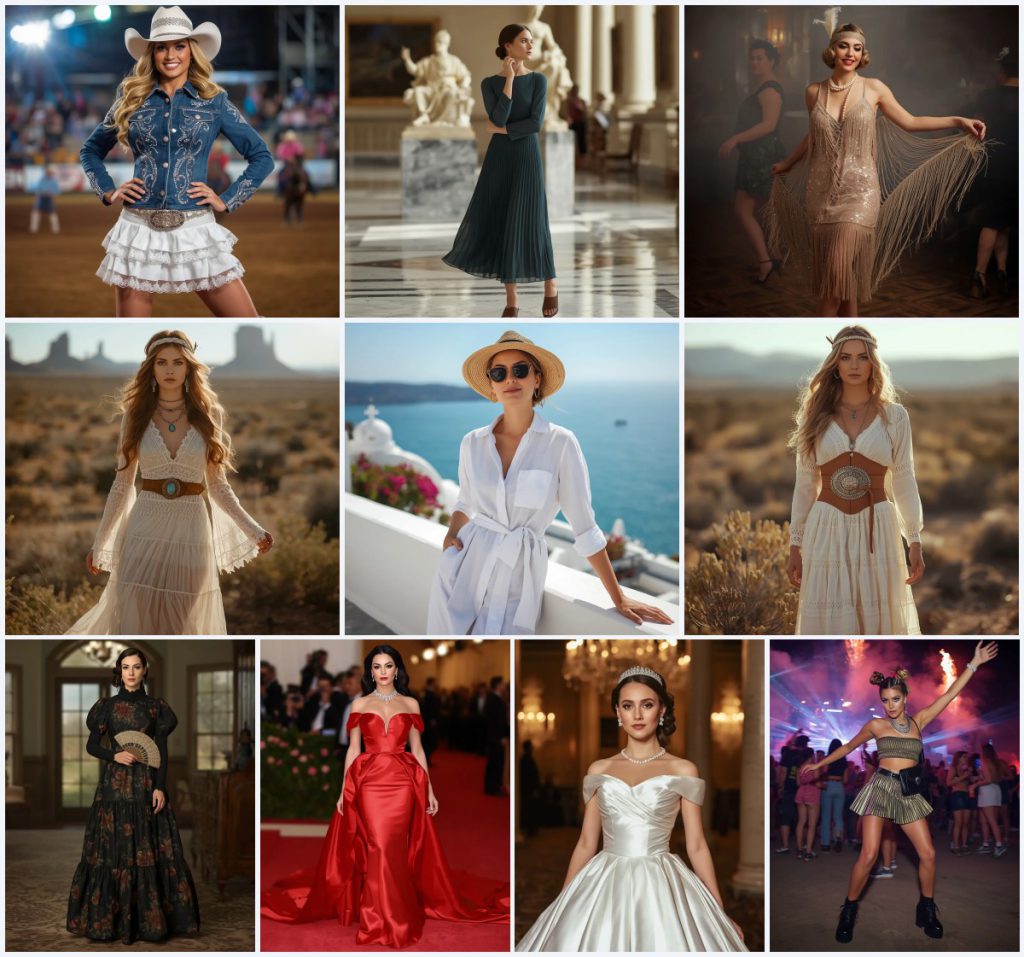
This collection gathers ten advanced prompts for generating images of women in distinct settings and outfits. Each prompt is a complete scene, not just a clothing description. The set moves from a rodeo arena with rhinestones and denim to a grand museum with pleated chiffon, from a roaring twenties flapper party to a desert plateau with lace and turquoise, from a Mediterranean balcony to a restored ranch house, and from a red carpet to a debutante ball and a summer music festival.
The shared thread is detailed styling and a clear photographic direction. Every prompt names fabrics, accessories, lighting, and a lens or aperture. That makes the collection useful for anyone testing how far a model can push realism, texture, and pose. You can run all ten as a series or pick the one that matches a mood you already have in mind.
What this women’s advanced prompt collection is asking for
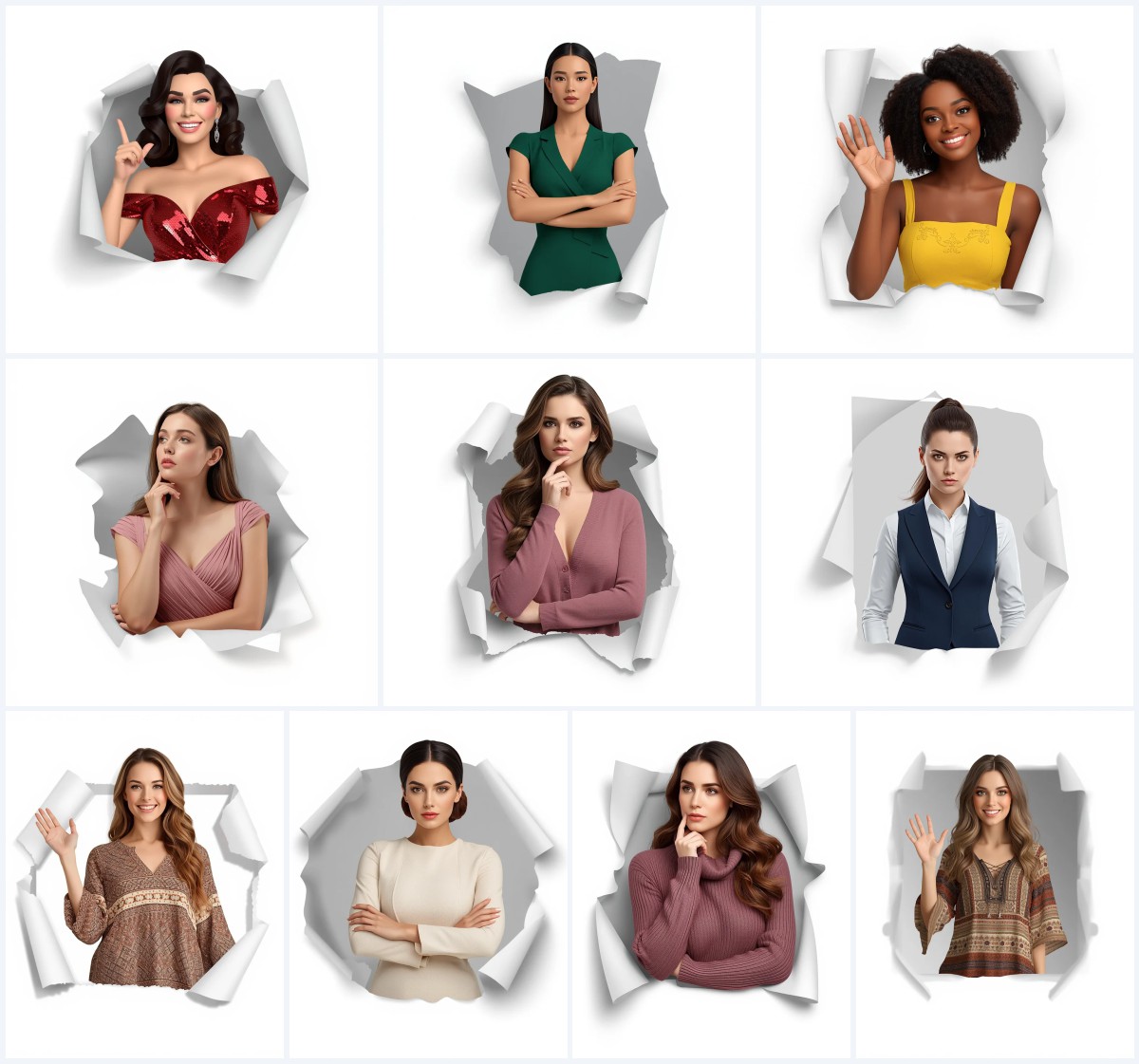
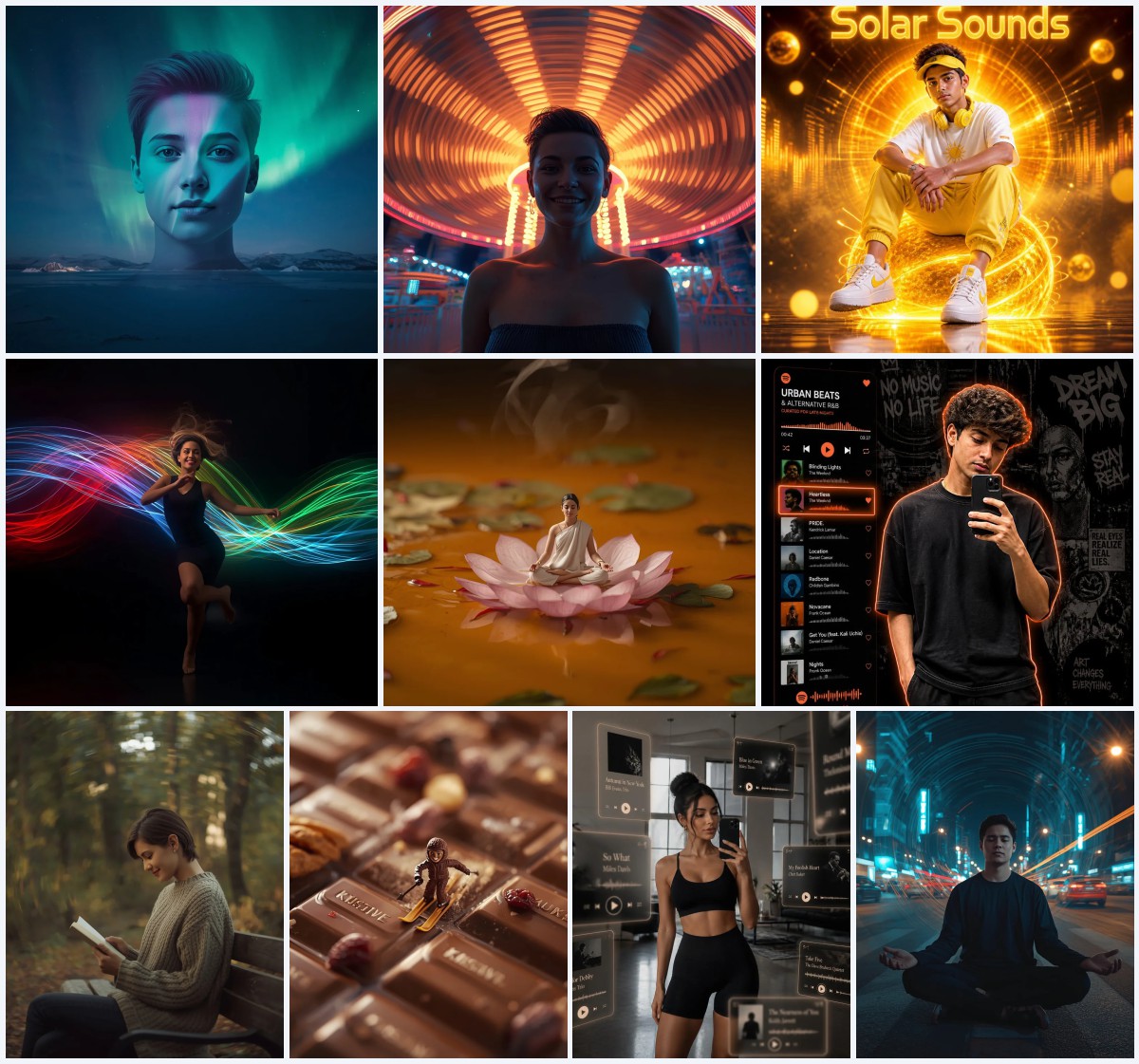
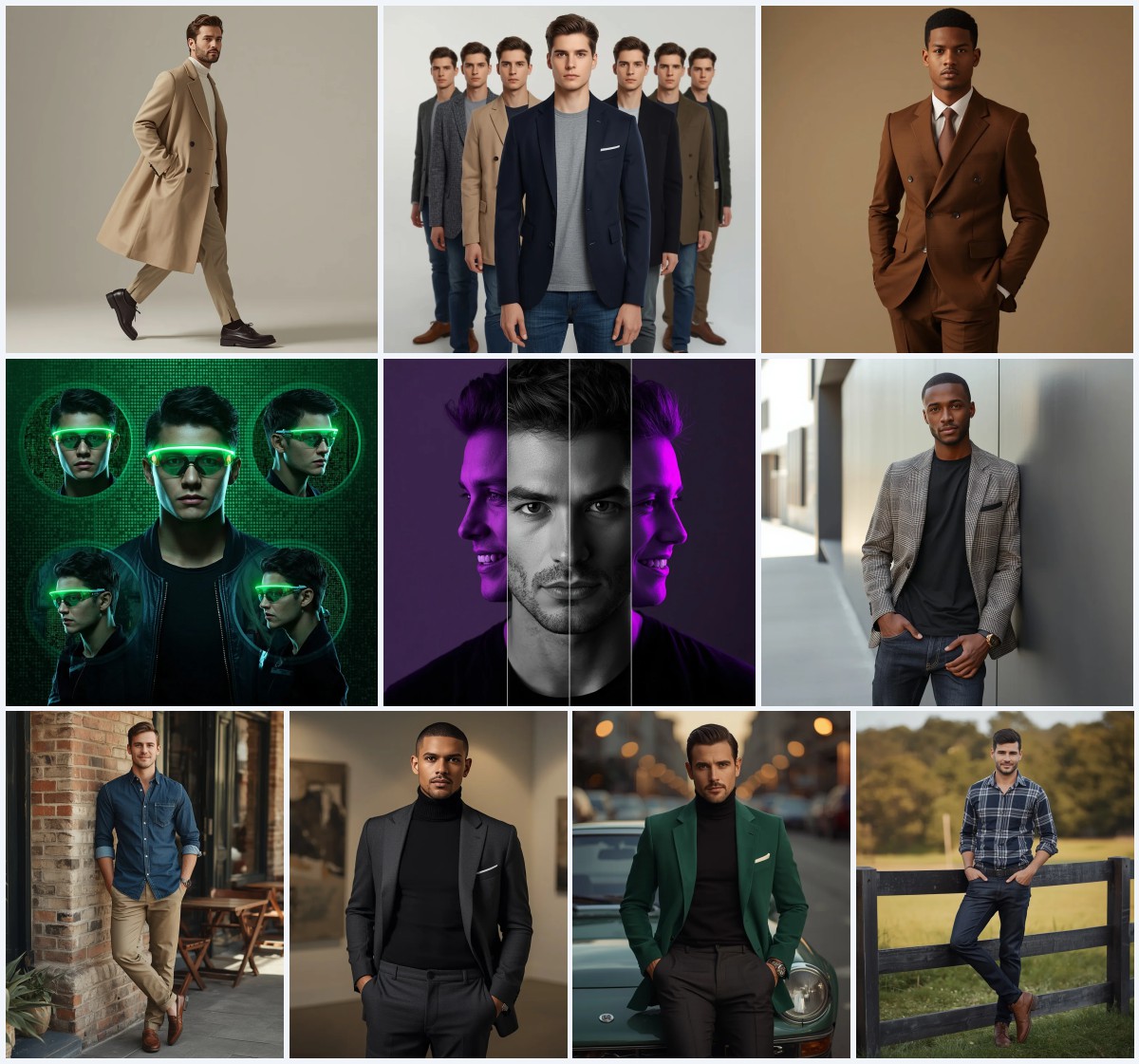
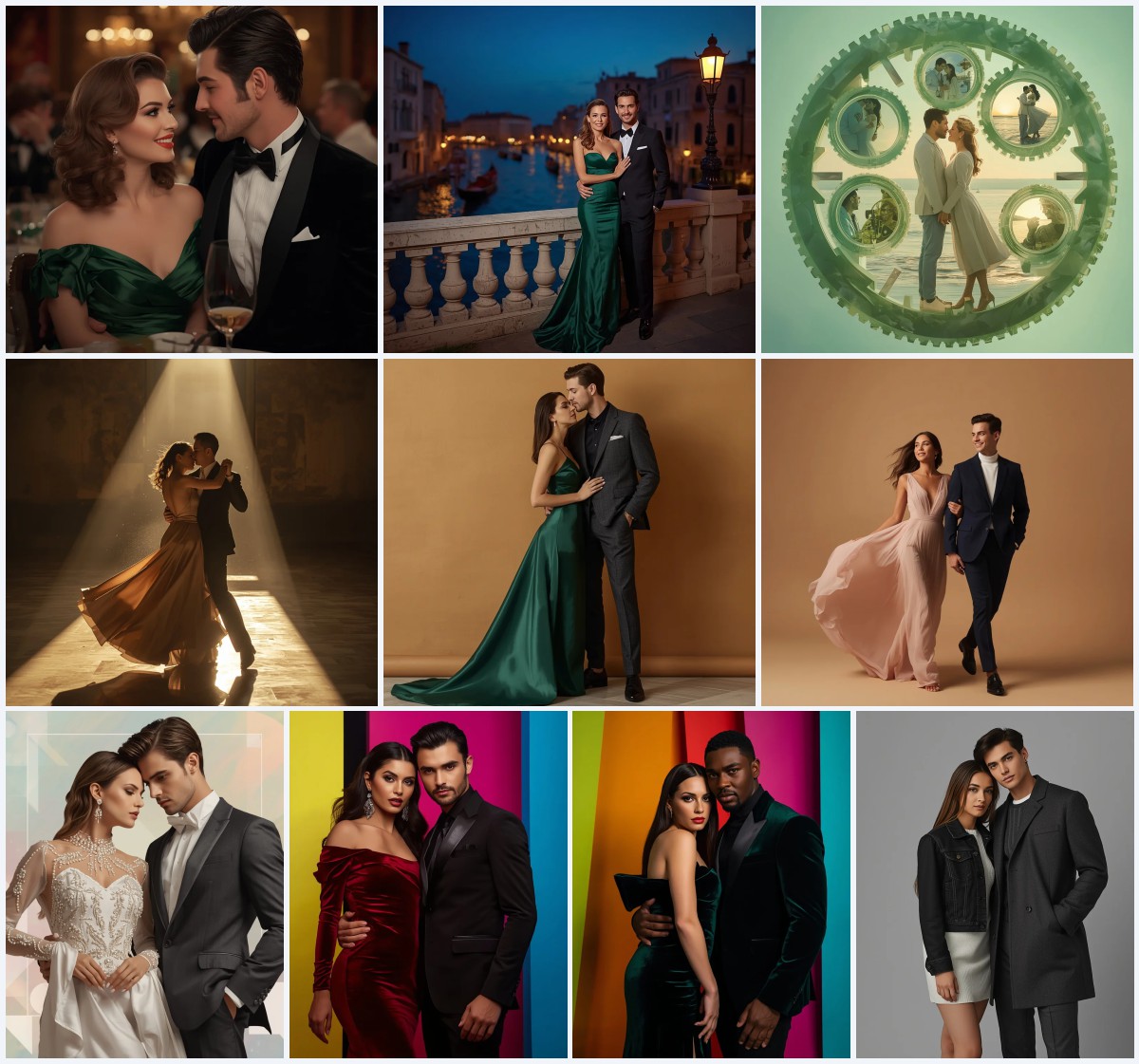
The collection asks for ten separate portraits of women, each with a specific outfit and location. The prompts are written for advanced image generation, so they include camera settings, lighting notes, and material details. The goal is not a generic beautiful woman but a woman who belongs in a particular story, from a rodeo queen to a museum visitor to a debutante.
- A fitted denim jacket with sparkling rhinestones and chain embroidery over a tiered white lace skirt
- A pleated chiffon midi dress in a muted jewel tone, such as deep teal, with long sleeves and a flowing skirt
- A gold sequin flapper dress with layers of fringe, spaghetti straps, and intricate beadwork
- A floor-length off-white lace dress with bell sleeves, a deep V-neckline, and a turquoise buckle belt
- A crisp white linen shirtdress with rolled-up sleeves and a self-tie belt
- A scarlet red satin gown with a sweetheart neckline, off-the-shoulder design, and a slight train
The shared scene and the real clauses that shape it
Each prompt places the woman in a fully described environment. The rodeo prompt says she poses “at a vibrant rodeo arena” with “bright arena lights” and a “lively blur of rodeo action and cheering crowds.” The museum prompt places her where she “thoughtfully observes a classical sculpture in a grand museum” with “soft, diffused natural light streaming from high windows.” The flapper prompt sets her dancing “at a themed flapper party” with “Art Deco decor, soft, smoky lighting, and the blurred figures of other elegantly dressed guests.”
The desert prompts use “golden hour sun” that “casts a warm, ethereal glow,” while the Mediterranean prompt puts her “on a sun-drenched balcony overlooking the turquoise Mediterranean sea.” The Victorian western prompt stands her “within a beautifully restored historic ranch house” under “soft, interior lighting from large windows.” The red carpet prompt uses “bright, high-key event lighting” and a “sophisticated blurred background,” and the debutante prompt adds “opulent chandeliers, grand pillars, and a soft glow from ambient lighting.” The festival prompt closes with a “dynamic blur of stage lights, smoke effects, and enthusiastic festival-goers.”
Why this set works for advanced image generation
This collection is built for people who want more than a pretty face. The prompts give the model enough constraints to produce a believable moment, and they leave room for the model to interpret pose and expression. That balance is rare in short prompts.
- The camera language is specific. Prompts mention an 85mm lens at f/2.2, a 50mm lens at f/2.8, a 35mm lens at f/2.2, and f/2.0, which pushes the model toward real photographic depth and lighting.
- The fabrics are named and textured. Lace, sequins, satin, chiffon, linen, jacquard, and eyelet lace all behave differently under light, so the model has to render distinct surfaces.
- The settings carry their own light. Arena lights, museum windows, golden hour, high-key event lighting, and stage lights each create a different color temperature and shadow pattern.
Three visual styles inside this prompt set
The collection stays inside three clear styles. These are not five separate looks, and you should not force a style that the prompt does not already contain. Each style below is drawn from the actual wording of the prompts.
- Western glamour: The rodeo, desert princess, desert blossom, and Victorian western prompts share denim, lace, leather, turquoise, silver buckles, feathers, and golden hour light.
- Classic elegance: The museum, Mediterranean, red carpet, and debutante prompts share chiffon, linen, satin, pearl or diamond jewelry, polished hair, and soft or high-key lighting.
- Vintage and festival energy: The flapper and festival prompts share sequins, fringe, metallic fabric, bold makeup, layered necklaces, and a blurred crowd of guests or festival-goers.
How to run these prompts without losing the details
Treat each prompt as a recipe, not a suggestion. The order of details matters less than keeping all of them present. If you drop the lens or the fabric, the image will drift toward a generic portrait. Use the steps below for any of the ten prompts, whether you start with the rodeo queen or the debutante.
- Copy the prompt. Paste the full prompt text into your image tool without shortening the clothing, lighting, or camera clauses.
- Upload a reference. If the tool supports it, upload a reference photo for pose, face shape, or body type, but keep the outfit and setting from the prompt.
- Generate the first pass. Run the prompt once at a standard resolution to see how the model handles the main light source and the main fabric.
- Check hands. Look at fingers, wrists, and any hand near a fan, belt, necklace, or skirt, because these are common failure points.
- Check face. Confirm the expression matches the prompt, such as a bright confident smile, a serene look, or joyful abandon, and that makeup details like a red lip or glitter are visible.
- Check the main object. Verify the hero item, whether that is the rhinestone denim jacket, the sequin flapper dress, the turquoise buckle, the white satin ball gown, or the pleated mini skirt.
Using a reference photo with this collection
A reference photo helps most when you want a specific pose or face. The prompts already describe the outfit and setting in detail, so the reference should not replace those. Use it to guide the model on body language and framing, then let the prompt handle the wardrobe and light.
- Choose a reference with clear, even lighting so the model can read the face and hands without guessing.
- Match the reference framing to the prompt, such as a full-body shot for the desert or debutante prompts and a closer shot for the museum or red carpet prompts.
- Avoid references that already contain a strong outfit, because the model may blend the reference clothing with the prompt clothing and lose the rhinestones, sequins, or satin.
Which tools handle these prompts best
Different tools respond to different parts of the prompt. Some are stronger at text interpretation, others at realism, and others at cinematic light. The table below compares four common options for this specific collection.
| Tool | Access | Typical realism | Useful here for |
|---|---|---|---|
| ChatGPT | Web and app | Moderate to high | Rewriting or expanding a prompt while keeping the rhinestone denim jacket and tiered white lace skirt intact. |
| Google Gemini | Web and app | Moderate to high | Describing the museum scene with a pleated chiffon midi dress and soft, diffused natural light from high windows. |
| Leonardo AI | Web with free credits | High | Rendering fabric texture, such as the gold sequin flapper dress with layers of fringe and intricate beadwork. |
| Midjourney | Discord and web | Very high | Cinematic light and depth, such as the golden hour glow on the off-white lace dress with a turquoise buckle belt. |
Tips that keep the materials believable
The prompts live or die on material detail. If the model turns lace into plain cotton or satin into plastic, the image loses its purpose. These three tips focus on the real objects named in the collection.
- For the rodeo and desert prompts, keep the leather and metal separate. A distressed leather belt with a large turquoise buckle should show grain and a slight sheen, not a flat brown band.
- For the flapper and festival prompts, protect the sparkle. Gold sequins, fringe, metallic fabric, and face gems need small, sharp highlights, so avoid prompts that flatten the light.
- For the museum, Mediterranean, red carpet, and debutante prompts, let the fabric lead. Pleated chiffon, crisp white linen, scarlet satin, and pristine white satin each need a different sheen, and the lens setting in the prompt helps the model choose.
Common issues and what to change
Even a detailed prompt can fail in predictable ways. The table below lists four failures this collection can actually produce and the adjustment that fixes each one.
| Issue | What to change |
|---|---|
| The rhinestones look like flat white dots | Add a clause about sharp specular highlights on the rhinestones and chain embroidery, and keep the bright arena lights. |
| The satin gown looks like cheap plastic | Strengthen the fabric description with a soft sheen and deep folds, and keep the high-key event lighting or soft warm light. |
| The background crowd is too sharp | Restate the blur, such as a lively blur of rodeo action, blurred figures of other guests, or a dynamic blur of stage lights. |
| The hands or fan look wrong | Simplify the hand pose, remove the antique lace fan if needed, and regenerate with the same lighting and outfit clauses. |
Frequently Asked Questions
Can I use these prompts for a single consistent character across all ten scenes?
Yes, if your tool supports character reference or seed locking. Keep the face and body reference the same, then change only the outfit, setting, and lighting clauses. The prompts already separate those elements, so the character can stay stable while the rodeo arena becomes a museum or a desert plateau.
Do I need to include the lens and aperture details?
They help more than they hurt. The 85mm, 50mm, and 35mm settings push the model toward real photographic depth, and the f-numbers control background blur. If your tool ignores camera language, you can replace those clauses with plain descriptions of shallow depth of field or a blurred background.
Which prompt in this collection is easiest for a beginner?
The Mediterranean linen shirtdress prompt is the most forgiving. A crisp white linen shirtdress, oversized sunglasses, a straw hat, and a bright balcony are simple shapes with clear light. The flapper and festival prompts are harder because sequins, fringe, and face gems demand precise highlights.
Conclusion
This collection is a strong test of any image model. It asks for ten different women, ten different wardrobes, and ten different lighting setups, all with camera language and material detail. Run them one at a time, check the hands, face, and hero object, and adjust only the clause that failed. The prompts reward patience because every detail you keep is a detail the model can render.
Only edit or upload a photo you have the right to edit, and respect the privacy and consent of anyone in your reference images.