

New 10 AI Prompts for Sci-Fi, Fantasy, and Surreal Digital Illustrations with Hyper-realistic Details
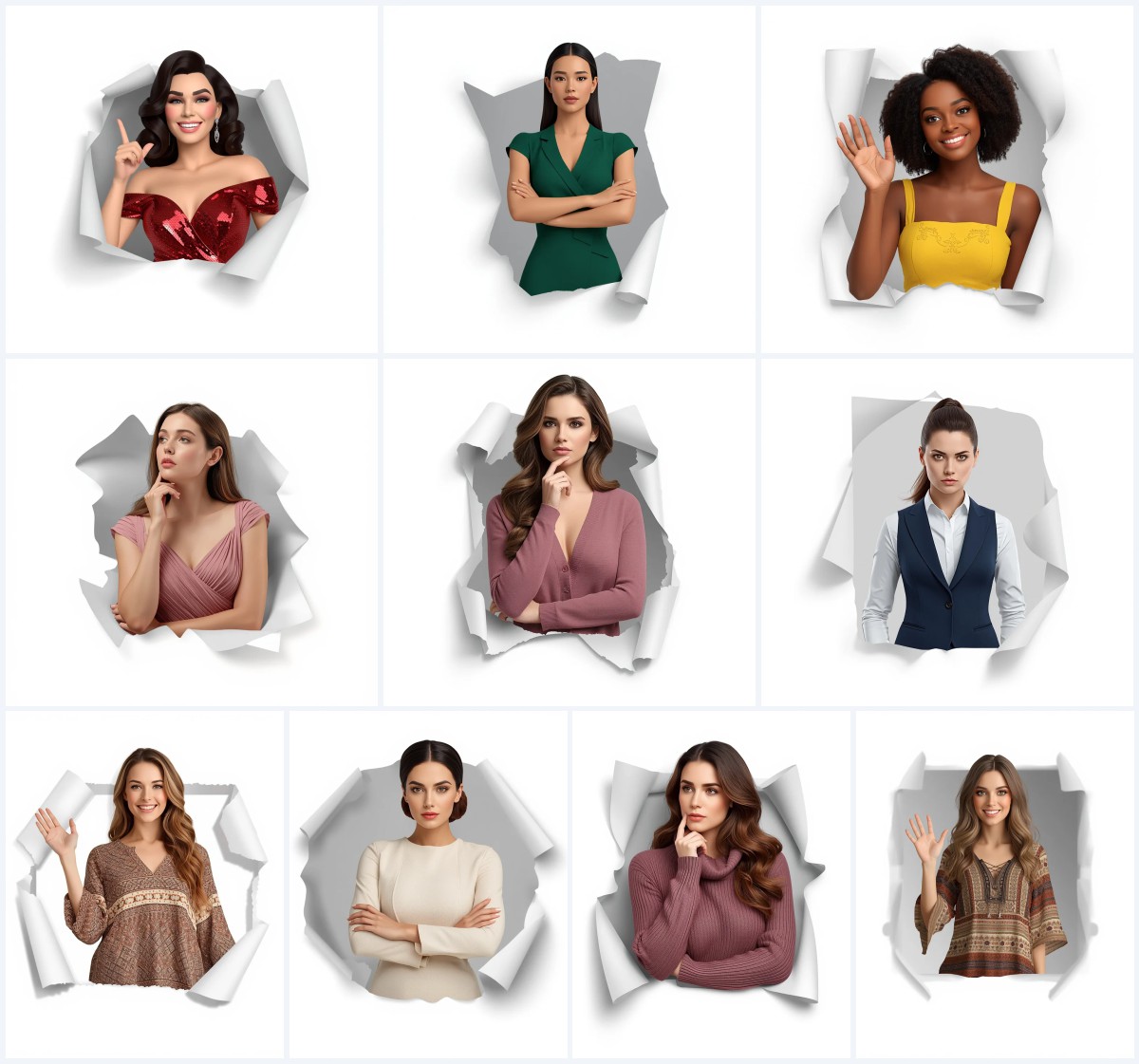
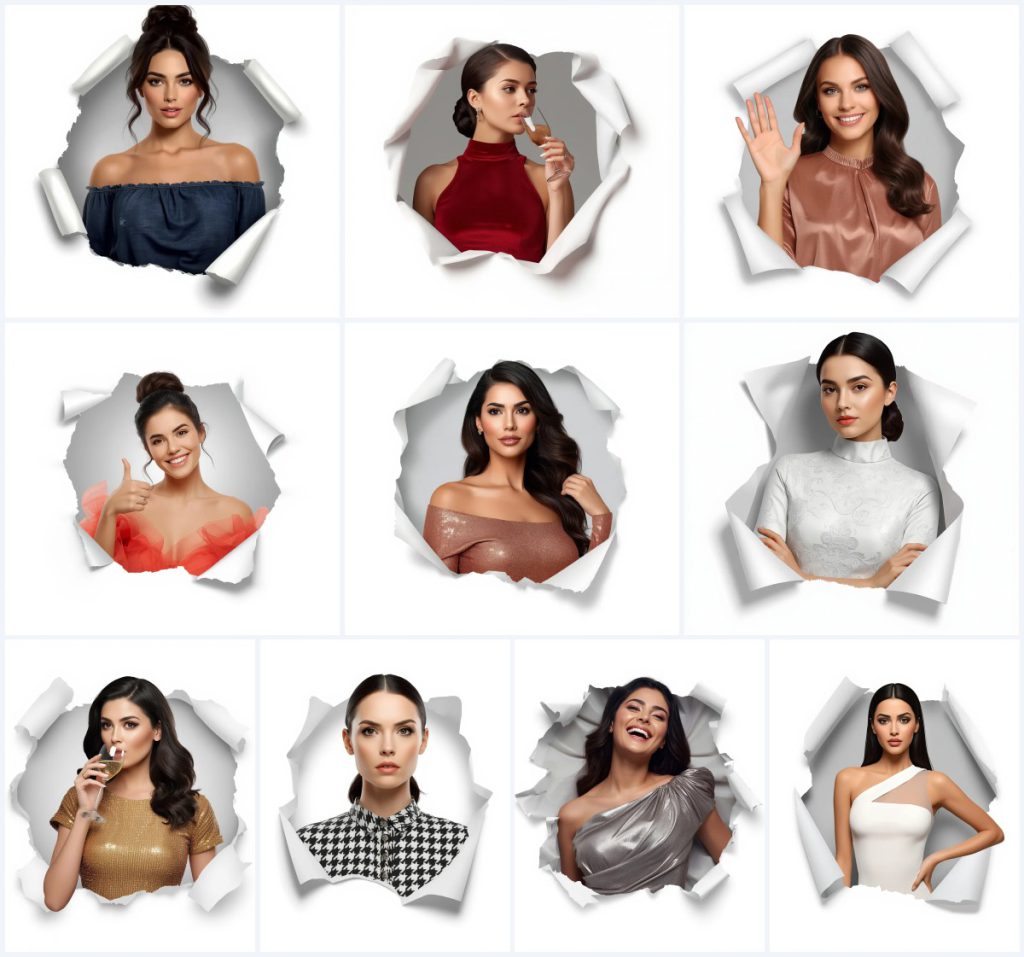
This collection gathers ten hyper-realistic portrait prompts built around one shared visual trick: a woman emerging through a torn paper hole. Each card keeps the same framing and lighting logic, then swaps the outfit and gesture. The titles range from the dark wash denim off-shoulder top to the classic white bodycon dress, with stops at red velvet, rose gold metallic, coral tulle, rose gold sequin, white brocade, gold sequin, houndstooth, and silver lamé.
Because the set is a collection, the useful way to read it is as one system with ten variations. The paper hole, the light grey gradient interior, and the preserved facial identity stay constant. What changes is the fabric, the hairstyle, the hand position, and the mood. That makes the set easy to test in batches and easy to compare across tools.
What this torn-paper portrait set is asking for
Every prompt in this collection describes a half-body, chest-up portrait of a beautiful woman whose facial identity is consistently preserved from the provided reference image. She emerges dynamically through a torn paper hole with realistic ripped edges wrapping naturally around her upper body. The interior of the hole uses a soft light grey gradient to enhance the illusion of depth, so she slightly pops out in 3D. The clothing and gesture change per card, but the illusion and the framing do not.
- A half-body, chest-up crop of a woman with her face matched to a reference image.
- A torn paper hole with realistic ripped edges wrapping around her upper body.
- A soft light grey gradient inside the hole that creates depth.
- A 3D pop-out effect where she slightly leans through the opening.
- A specific garment per card: dark wash denim off-shoulder top, classic red velvet bodycon dress, shimmering rose gold metallic blouse, playful coral tulle layered top, shimmering rose gold sequin off-shoulder top, sophisticated white brocade dress, dazzling gold sequin top, modern houndstooth print blouse, glamorous silver lamé draped top, or classic white bodycon dress.
- A named gesture or expression: a slight knowing smile, a delicate sip, a friendly wave, a thumbs-up, a playful wink, calm crossed arms, a luxurious sip, a serious focused look, joyful laughter, or a hand on the hip.
The scene inside the paper hole
The setting is not a room or a street. It is the paper itself. The prompt says she "emerges dynamically through a torn paper hole, with realistic ripped edges wrapping naturally around her upper body." That single clause turns a flat background into a stage. The ripped edges are not decoration; they are the boundary between the image and the surface it breaks through.
Inside that boundary, "the interior of the paper hole features a soft light grey gradient, enhancing the illusion of depth as she slightly pops out in 3D." The gradient does the work that a shadow would do in a real photograph. It suggests that the paper has thickness and that she is closer to the viewer than the sheet around her. The result is a portrait that reads as both printed and alive.
Why this set works for hyper-realistic portraits
The paper hole is a simple device that solves a hard problem. It gives a flat generation a clear depth cue without needing a full environment. It also forces the model to commit to an edge, which is where realism usually breaks down. When the ripped edge reads correctly, the rest of the image feels more trustworthy.
- The torn paper edge creates a strong depth cue, so the 3D pop-out reads as real rather than pasted.
- The fixed framing and consistent reference-image identity make the ten cards easy to compare side by side.
- The outfit swaps let you test fabric realism, from velvet and brocade to sequin, lamé, and tulle, inside one repeatable composition.
Three styles hiding in this collection
This set is not a style sampler in the usual sense. It is one composition repeated across three readable style directions. All three stay inside the prompt, because the prompt itself already names the fabric, the hair, and the mood. You do not need to add a genre label to get a different look; you only need to choose a different card.
- Bohemian glam: The dark wash denim off-shoulder top with subtle distressed details and a relaxed, bohemian glam vibe, paired with a casual half-up bun and loose strands.
- Hollywood elegance: The dazzling gold sequin top with a classic round neckline and short sleeves, styled with glamorous Hollywood-esque waves and a luxurious sip from a delicate champagne coupe.
- Modern graphic: The modern houndstooth print blouse with sharp, contrasting patterns in black and white and a structured collar, matched with a sleek low ponytail and a serious, focused expression.
How to run these prompts without losing the face
The workflow matters as much as the wording. Start with the card you want, keep the reference image clean and well lit, and change only one variable at a time. The paper hole and the light grey gradient should stay untouched across attempts, because they are the shared spine of the set.
- Copy the prompt. Copy the full text of the card you want, from the half-body framing through the gesture, without trimming the paper-hole clause.
- Upload a reference. Upload a clear, front-facing reference photo with even lighting so the model can preserve facial identity.
- Generate. Generate the first pass and note whether the torn edges wrap naturally around the upper body or float like a sticker.
- Check hands. Check the hands, especially on the wave, thumbs-up, wink, and hip cards, where fingers are most likely to merge or multiply.
- Check the face. Check the face for identity drift, then compare it to the reference before judging the outfit.
- Check the main object. Check the main object, meaning the torn paper hole and its light grey gradient interior, and confirm the 3D pop-out still reads.
Choosing the reference photo
The reference image is doing more work here than in a typical portrait prompt, because the text asks for a consistently preserved facial identity. A sharp, neutral photo gives the model the best chance to keep the same person across all ten cards. If the reference is blurry or heavily filtered, the paper-hole illusion will still appear, but the face will drift.
- Use a front-facing portrait with even, soft lighting and no strong shadows across the face.
- Avoid sunglasses, heavy hats, or hair covering the eyes, since the set relies on expressions like a wink or joyful laughter.
- Keep the same reference across the batch so the ten cards read as one person in ten outfits.
Which tool to use for which card
Not every tool handles the same clause equally well. Some are stronger at preserving a face, others at fabric texture, and others at the torn-paper edge. The table below maps each tool to the part of this collection it tends to handle best.
| Tool | Access | Typical realism | Useful here for |
|---|---|---|---|
| ChatGPT | Web and app, paid tiers for image editing | High on faces, moderate on fine paper edges | Preserving facial identity across the denim and velvet cards. |
| Google Gemini | Web and app, free and paid tiers | High on lighting, moderate on sequin detail | The soft light grey gradient inside the torn paper hole. |
| Leonardo AI | Web, free credits and paid plans | High on texture, variable on identity | The shimmering rose gold sequin off-shoulder top and silver lamé drapes. |
| Midjourney | Web and Discord, paid plans | High on cinematic mood, lower on exact identity | The glamorous Hollywood-esque waves on the gold sequin top card. |
Three practical tips for cleaner results
Small changes to the wording or the reference can fix most of the common failures. These three tips target the parts of the prompt that models most often misread: the paper edge, the fabric, and the hand.
- If the torn paper hole looks like a clean circle, add the word ragged and keep the phrase realistic ripped edges wrapping naturally around her upper body close to the front of the prompt.
- For the white brocade dress and the houndstooth print blouse, name the pattern twice so the model does not smooth it into plain fabric.
- For the thumbs-up and friendly wave cards, generate at least four variations and pick the one where the fingers read correctly before you judge the rest.
Common failures and what to change
Most problems with this set come from the edge, the face, or the hand. The table below lists the failures these prompts can actually produce and the single change that usually helps.
| Issue | What to change |
|---|---|
| The torn paper hole looks like a smooth oval | Add ragged and torn to the paper description and move the ripped-edge clause earlier in the prompt. |
| The face drifts from the reference image | Upload a sharper, front-facing reference and lower any style or stylize setting that pushes the model away from the photo. |
| The sequin or lamé fabric turns into flat glitter | Name the garment twice, for example shimmering rose gold sequin off-shoulder top, and add that the texture catches the light. |
| The hand on the wave or thumbs-up card is malformed | Generate more variations, keep the hand near the shoulder as in the wink card, and avoid overlapping fingers with the paper edge. |
Frequently Asked Questions
Can I use one reference photo for all ten prompts in this collection?
Yes, and you should. The set is designed around a consistently preserved facial identity, so using the same clean, front-facing reference across all ten cards keeps the batch coherent.
Why does the prompt mention a soft light grey gradient inside the paper hole?
That gradient is what sells the 3D pop-out. Without it, the torn paper hole looks flat and the woman appears pasted on top rather than emerging through it.
Which card is easiest to get right on the first try?
The calm and collected card with the sophisticated white brocade dress and crossed arms is usually the most stable, because the pose is still and there are no fingers near the face or the paper edge.
Conclusion
This collection is less about ten separate images and more about one repeatable illusion. The torn paper hole, the light grey gradient, and the preserved face form a stable base. The outfits, from dark wash denim to silver lamé, are the variables you can tune. Run the cards in a batch, keep the reference consistent, and check the edge, the hands, and the face before you judge the fabric.
Only edit and upload a reference photo that you own or otherwise have the right to edit.